You probably get regular eye tests, dental checkups, schedule an annual physical, and closely monitor your cholesterol and blood pressure, but when was your last hearing test?
Unfortunately, hearing tests don’t usually happen until a physician or one of your loved ones insists that you have your hearing checked.
6 Reasons People Put Off Hearing Assessments
Discover the most common concerns that keep people from scheduling a hearing test—and why addressing them can make all the difference.
My hearing loss doesn’t really bother anybody
If I had a hearing problem, then I’d be the first to know
I’ll just turn up the volume when I can’t hear
Only old people suffer from hearing loss
I won’t learn anything useful from a hearing test
I’m not sure what goes on during a hearing test
Physical Examination Of Your Ears
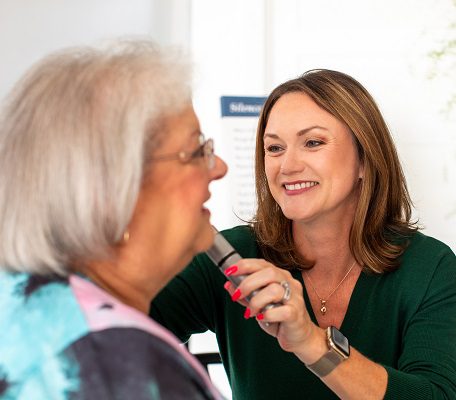
An otoscopy involves the use of an otoscope (a magnifying glass with a light on a tapered tip) that allows your audiologist to evaluate the outer ear canal and eardrum. During an otoscopy, we’re assessing skin conditions, earwax accumulation, the presence of other obstructions, and the structural health of the eardrum.
Hearing Tests During A Hearing Assessment
Best practices for professional hearing assessments include a full series of hearing tests in order to pinpoint the exact type of hearing loss as well as its level of severity, including:
Tympanometry
This test checks for middle ear issues like fluid or pressure from colds/allergies. You’ll sit still while a short air burst is sent into your ear during the exam.
Pure Tone Audiometry
Pure tone audiometry tests your hearing range. You’ll wear headphones in a sound booth & respond to tones. A headband checks inner ear function to detect hearing loss.
Word Recognition Testing
You’ll hear spoken words and repeat them to test speech understanding. Words may be played with background noise to assess clarity and hearing aid suitability.
Otoacoustic Emissions
Otoacoustic emissions test cochlear hair cell function. A probe in your ear measures inner ear response to sound. No response needed—just sit still during the test.
Play Audiometry For Children
For kids 2–5, play audiometry uses games to test hearing—like placing blocks when sounds are heard. It helps find hearing loss and keeps the child comfortable.