If your child doesn’t seem to respond to sounds the way you expect, or a teacher says they often miss directions, it’s natural to worry. A pediatric audiologist can help you get clear answers.
At Flex Audiology, we recognize how concerning it can be for parents when hearing difficulties affect their child’s growth, communication, and development. With extensive experience helping hundreds of children, we have earned the trust of local families, pediatricians, and schools through our dedication to exceptional pediatric hearing care.
Signs Your Child May Have Hearing Loss
Most babies have a hearing screening at birth, but passing it doesn’t rule out every hearing problem. Some hearing loss develops later. Some is mild enough to slip past a screening. Ear infections and fluid can also cause hearing changes that come and go. Signs worth noticing include:
Not reacting to loud or familiar sounds
Speech that is delayed or harder to understand than other kids’ speech
Often asking “what?” or needing directions repeated
Turning the TV or tablet volume up higher than others like it
Rubbing or tugging at the ears often
No single sign confirms hearing loss. If you notice any of them, a hearing evaluation is a sensible next step.
How to Support a Child With Hearing Loss
A hearing loss diagnosis affects the whole family, and it’s normal to feel unsure at first. Small, steady habits help:
Face your child when you speak.
Cut down background noise during conversations.
Check that they understood.
Keep teachers informed so classroom supports can be put in place.
Connecting with other families who have been through this can help too. Above all, keep expectations high. Hearing loss is one part of your child’s story, not the whole of it.
Treatment Options for Children With Hearing Loss
The right treatment depends on the type and degree of hearing loss:
Hearing loss from ear infections or fluid is often managed by your child’s pediatrician or an ENT, who may recommend ear tubes.
Permanent hearing loss is often treated first with pediatric hearing aids, adjusted as your child grows.
More significant hearing loss may make a child a candidate for cochlear implants.
We’ll walk you through each option, as well as work with your child’s other providers along the way.
Helping Children With Hearing Loss Build a Bright Future
With the right support, children with hearing loss can do well in school, with friends, and in the activities they love. As kids get older, we help them become more independent. That includes caring for their own devices, speaking up when they can’t hear, and asking for what they need in class.
Frequently Asked Questions About Pediatric Hearing Loss
Discover the most common concerns that parents or children may have during their hearing care journey.
What causes hearing loss in children?
How is hearing loss treated in children?
How do I deal with my child’s hearing loss?
What does the future look like for my child with hearing loss?
What to Expect During a Pediatric Hearing Evaluation
Testing is non-invasive and suited to your child’s age. Depending on the child, it may include:
Checking how the eardrum and middle ear are working
Measuring responses from the inner ear
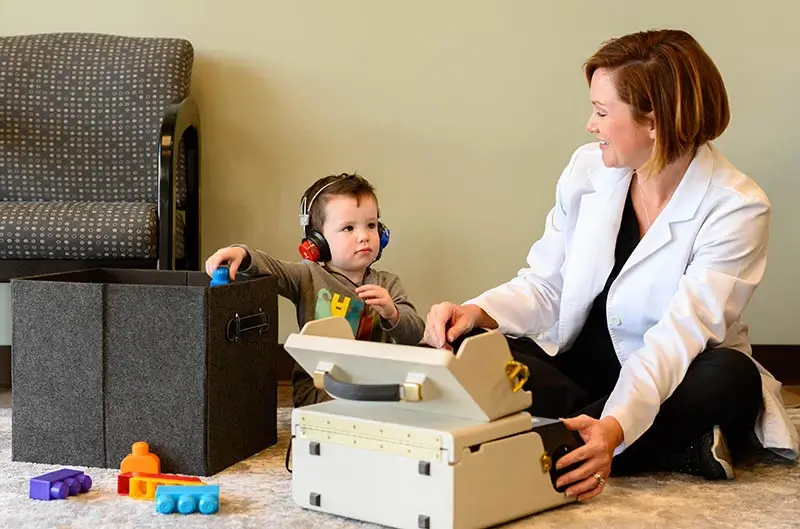
Listening tasks that feel like a game, such as turning toward a sound or dropping a block in a bucket when they hear a beep
Older children may raise a hand or repeat words instead. In most cases, you’ll stay with your child the whole time. Afterward, we’ll explain the results in plain language and talk through next steps, whether that’s monitoring, a referral, or treatment.

Early Detection Produces Best Results
Hearing plays a central role in how children develop speech, language, and social skills. Finding hearing loss early gives your child more time to benefit from support. If something about your child’s hearing concerns you, there’s no need to wait until it becomes obvious. Schedule a hearing assessment with an audiologist at Flex Audiology, and we’ll help you understand where things stand.